
2048 Cupcakes
Merge, match, and master the sweetest version of the classic 2048 puzzle.
Combine matching cupcakes, create bigger and sweeter tiles, and keep building your board until you reach the legendary 2048 Cupcake. Every move matters, every merge changes the board, and every game gives you a new challenge to solve.
What Is 2048 Cupcakes?
2048 Cupcakes is a free, browser-based puzzle game that combines the classic 2048 sliding-tile mechanics with a colorful cupcake theme. Instead of moving plain numbered tiles around the board, players combine matching cupcake tiles to create higher-value cupcakes and gradually work toward the cupcake 2048 tile. The rules are easy to understand, but reaching the highest tiles requires planning, board control, and careful decisions about every move.
2048 Cupcakes game is built around a simple progression: move, match, merge, and level up. On the standard 4×4 board, players can use the arrow keys on desktop or swipe controls on supported mobile devices to move the tiles in four directions. When two matching tiles meet, they merge into the next level. A new tile then appears after a valid move, gradually filling the board and creating the central challenge of the game: finding space for future merges without losing control of your largest cupcakes.
What makes 2048 Cupcakes different is the way the familiar number-based puzzle is presented as a visual cupcake journey. Each successful merge represents another step in the progression, giving players something recognizable to follow as the board develops. The goal is not simply to make random combinations as quickly as possible. Players need to protect their larger tiles, preserve open spaces, choose useful directions, and think several moves ahead if they want to consistently reach 512, 1024, 2048, or beyond.
From a player-experience perspective, 2048 Cupcakes is designed to keep the barrier to entry low. There is no complicated tutorial to complete before playing: open the 2048 Cupcakes game, start moving the board, and the basic rules become clear within a few turns. The experience is suitable for short casual sessions, while the strategic nature of the game gives experienced players a reason to return and chase a higher score or a larger tile.
The Cupcakes 2048 brand is built around this combination of instant playability and long-term challenge. The platform can also expand beyond the classic experience through new cupcake themes, seasonal editions, alternative board sizes, gameplay variations, mobile improvements, and strategy-focused features. This allows the familiar 2048 concept to remain recognizable while giving returning players new ways to explore the cupcakes game.
How to Play 2048 Cupcakes
2048 Cupcakes is easy to start but takes careful planning to master. The goal is to combine matching cupcake tiles, create higher-value cupcakes, and keep the board open long enough to reach the 2048 tile. The basic rules are simple, but every move can affect the moves that come after it.
Move the Cupcake Tiles
Use the arrow keys on a desktop or swipe in the direction you want on a phone or tablet. When you make a move, all movable tiles slide as far as possible in that direction.




Combine Matching Cupcakes
When two cupcakes with the same value meet, they merge into one higher-value cupcake. For example, 2 + 2 = 4, then 4 + 4 = 8, continuing through 16, 32, 64, 128, 256, 512, 1024, and eventually 2048.
Make Room for New Tiles
After a successful move, a new tile appears in an empty space. This means the board gradually becomes more crowded. Keeping several open spaces available is important because it gives you more options for your next move.
Build Toward Cupcakes 2048
Try to keep your highest-value cupcake in a stable corner while building smaller tiles around it. Avoid making unnecessary moves that pull your largest tile away from its position or fill the center of the board too quickly.

Plan Before You Move
The best moves are not always the ones that create an immediate merge. Look at the available spaces, consider where the new tile could appear, and think about whether your next move will leave enough room to continue combining cupcakes.
Create the 2048 Cupcake
Continue combining matching cupcakes and managing the available space until you reach the 2048 cupcake. Getting there means keeping smaller tiles useful, protecting your larger cupcakes, and avoiding moves that leave the board with no workable options. Seeing the board progress from small values to 512 Cupcake, 1024 Cupcake, and finally 2048 gives Cupcake Game 2048 a clear sense of progression and makes each well-planned merge feel worthwhile.
 ♡
♡
At 2048 Cupcakes, the cupcake game is designed to make these rules easy to understand from the first move while leaving room for players to develop their own strategies. Start with the basic corner strategy, learn how tile positions change after each move, and gradually experiment with more advanced ways to control the board.
2048 Cupcakes Tile Evolution
Every merge inCupcakes2048 unlocks another stage of the cupcake journey. As two matching tiles combine, their value doubles and the cupcake evolves into a new design. This progression gives players a simple visual way to follow their game, from the first Vanilla Birthday tile all the way to the final 2048 cupcakes.
The Complete Cupcake Evolution



How the Evolution Progresses
Start with Vanilla Birthday
The 2-value Vanilla Birthday is the starting point of the cupcake progression. When two matching 2 tiles are combined, they create the next stage: 4 Bubblegum Pink.
Build Through the Early Tiers.
The same merge rule continues throughout the board: 4 + 4 creates 8 Sunshine Vanilla, while 8 + 8 creates 16 Valrhona Blonde Ganache. Every successful combination doubles the value and moves the player one step further through the cupcake game collection.
Reach the Higher-Value Cupcakes.
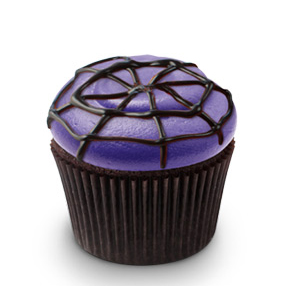
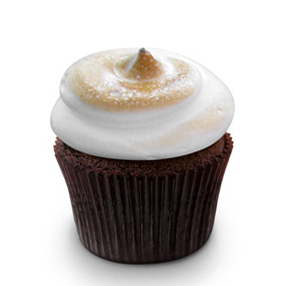
As the board develops, the cupcakes progress through 32 Chocolate Peanut Butter Cheesecake, 64 Chocolate Mint Fudge, 128 Chocolate Spider Web, and 256 Toasted Marshmallow. At these stages, managing empty spaces and keeping high-value tiles in useful positions becomes increasingly important.
Approach the Final Tier
The later stages include 512 Cookies and Creme and 1024 Chocolate Sundae. These tiles require increasingly careful planning because creating another matching pair becomes more difficult as the board fills.
Create the 2048 Cupcake
The progression reaches its final tier with 2048 White Chocolate Peppermint. Reaching this cupcake means successfully combining matching tiles through every stage while maintaining enough space and control to keep the board moving.
At 2048 Cupcakes, every cupcake represents more than a number. The changing designs make progress easy to recognize, while the increasing tile values give players a clear long-term objective. From the first Vanilla Birthday to White Chocolate Peppermint, the evolution keeps each merge visually rewarding and gives players another reason to plan their next move carefully.
How to Get Better at 2048 Cupcakes
Getting better at 2048 Cupcakes is not about making more moves—it is about avoiding moves that leave you with fewer useful options. As the board fills, the difference between a good run and a dead board often comes down to tile order, corner control, and whether you are creating space before you actually need it. The following techniques focus on decisions you can apply during a real game, not just general advice to think ahead.
Step 1: Lock Your Largest Cupcake Into a Corner
Choose one corner for your highest-value cupcake and treat it as the anchor of your board. If your largest tile is in the bottom-right corner, for example, avoid using Up unless there is a specific reason to do so, because moving upward can pull the anchor away from its safe position.
Once the largest cupcake is settled, build the next-highest tiles beside it rather than randomly around the board. A useful target is to keep your larger values in descending order along the same edge. This gives new smaller cupcakes a clearer path toward future merges without repeatedly disturbing your largest tile.
Step 2: Create Space Before You Run Out of It
Do not wait until the board is almost full before trying to create empty spaces. Count the available gaps after important merges and ask whether your next move will leave enough room for the new cupcake that appears afterward.
A practical rule is to prefer a move that creates a merge and leaves multiple empty cells over a move that creates a larger cupcake but fills most of the board. When you have only one or two spaces left, your choices become much more limited, so space should be treated as a resource rather than unused room.
Step 3: Keep Your Tiles in a Useful Order
Large cupcakes become difficult to merge when similar values are scattered across different parts of the board. Try to keep your high-value tiles organized along one edge, with lower values feeding toward them.
For example, if your main corner contains 512, having 256 and 128 nearby is more useful than placing another 512 on the opposite side of the board. The goal is to create a sequence where smaller cupcakes can be combined repeatedly until they reach the larger values you need for 256 → 512 → 1024 → 2048.
Step 4: Check What the Swipe Does to the Entire Board
Before making a move, do not look only at the cupcake you are about to merge. Check three things: which tiles will move, which spaces will disappear, and whether your corner tile will stay protected.
For example, a left swipe might immediately combine two useful cupcakes, but it could also pull a large tile away from your chosen edge and leave several small tiles trapped in the wrong order. If the merge does not improve the overall structure, it may be better to wait for another direction.
This is especially important when the board has only a few empty spaces. At that point, one unnecessary swipe can create a position that is difficult to recover.
Step 5: Use Forced Moves Carefully
When the board becomes crowded, you may reach a position where only one or two directions actually change the board. These are forced moves, and recognizing them early can help you avoid creating the same situation yourself.
Before swiping, check whether a direction produces any movement or merges. If several directions are available, choose the one that preserves your largest tile and keeps the most useful empty space. If only one direction is available, consider whether it creates a new merge or simply pushes the board closer to being blocked.
Step 6: Build Merges in Pairs, Not Randomly
Avoid combining tiles simply because a merge is available. Instead, look for follow-up merges. If you can create a 16 now, check whether the resulting 16 can soon meet another 16, or whether the move will leave the new tile isolated.
This becomes increasingly important with higher values. Creating one 128 is useful, but creating a 128 in a position where another 128 can reach it is much more valuable. The same principle applies throughout the later stages: prepare the board so one merge creates the conditions for the next.
Step 7: Protect Your Highest-Value Chain
Once you reach higher cupcakes, avoid creating a second large tile that you cannot easily control. A board with 512 + 512 can look promising, but if those tiles are separated by smaller cupcakes and cannot be brought together without breaking your main structure, the position may become difficult.
Instead, focus on maintaining a clear progression around your main corner. Build 128 → 256 → 512 → 1024 in an organized area of the board, and use the remaining spaces for smaller tiles that can eventually feed into that chain.
Step 8: Study the Move That Ended Your Game
When a board fails, do not only look at the final move. Go back a few turns and identify when your useful structure disappeared.
Ask yourself:
- Which move pulled the largest cupcake away from its corner?
- When did the board stop having enough empty spaces?
- Did a smaller cupcake become trapped behind a larger one?
- Did you make a merge that had no useful follow-up?
- Which direction became unavailable first?
Finding the earlier mistake is more useful than simply remembering that the final board was full. Over several games, these patterns help you recognize dangerous positions before they become unavoidable.
Build Your Own 2048 Cupcakes Strategy
There is no single movement sequence that works for every board. What matters is having a few reliable rules you can apply when the position changes: protect one corner, organize larger cupcakes along an edge, create space before it becomes critical, and make merges that lead to another useful merge.
The biggest improvement usually comes from changing the question you ask before each swipe. Instead of asking “Can I make a merge?”, ask “What will this merge leave me with?” That small change helps turn individual moves into a consistent board-building strategy and gives you more control as you work toward the 2048 cupcake game.
Can You Play 2048 Cupcakes on Mobile?
Yes. 2048 Cupcakes can be played on a phone or tablet using touch controls, with the same tile values, merging rules, and 2048 goal as the desktop version. The main difference is how you control the board. Instead of pressing four keyboard directions, you use swipes, which makes the cupcake game convenient for short sessions but also introduces a few touch-specific challenges. A good mobile strategy is not simply to play faster—it is to make each swipe more deliberate and keep the board easy to read.
Open 2048 Cupcakes in Your Mobile Browser

Open 2048 Cupcakes in a modern mobile browser and load the game board. Before starting, make sure the board is fully visible and that browser controls or other elements are not covering part of the Cupcakes game.
A stable screen position is useful because Mobile Cupcake 2028 relies heavily on seeing the relationship between your largest cupcakes, empty cells, and smaller tiles. If the board is difficult to view, rotating the device or adjusting the browser’s display may make individual tiles easier to track.
Use Short, Controlled Swipes
Swipe left, right, up, or down across the board to move the cupcakes. You do not need an exaggerated swipe—the important thing is that the gesture is clear and intentional.
On a touchscreen, it is easy to make a move before fully checking the board. Try to separate looking from swiping: first identify the direction you want, then make one controlled gesture. This is especially useful when the board is nearly full, where a single unwanted move can change the position of several important tiles.
Avoid Accidental Double Swipes
One difference between keyboard and touch controls is that your finger can remain on the screen after a swipe. Rapidly swiping again before checking the result can lead to two moves when you intended to make only one.
After an important merge, pause briefly and read the new board. This gives you time to see the new tile, identify newly opened spaces, and decide whether your previous corner structure is still intact.
Use One-Handed Play Without Losing Board Control
Phones make it tempting to play with one hand, especially during short sessions. If you do, keep your swipes within the central area of the board rather than reaching too far toward the edge of the screen. This can make directional gestures more consistent and reduce awkward movements.
For larger boards or tablets, two-handed use can make longer sessions more comfortable. The important point is not how you hold the device, but whether you can make four directions reliably without accidentally touching another part of the screen.
Give Extra Attention to the Corners
Corner-based strategies can feel slightly different on mobile because your finger can partially cover the tiles while you swipe. Before making a move, quickly check the location of your highest-value cupcake and the edge where your larger tiles are organized.
For example, if your 1024 cupcake is anchored in the bottom-right corner, do not swipe up simply because the upper part of the board appears to offer a merge. That move may pull the 1024 away from its protected position and disrupt the tile order you have built along the bottom edge.
Use Mobile-Friendly Play to Your Advantage
2048 Cupcakes is designed for convenient browser-based play, whether you are using a phone, tablet, or desktop computer. You can start a game during a short break, play with one hand, and return to another attempt without dealing with downloads or account registration. The controls are simple, but reaching the 2048 White Chocolate Peppermint still depends on careful tile management.
Why Play Cupcake 2048 on Mobile?
- Free to play — Enjoy the puzzle without a purchase.
- No download — Play directly from your browser.
- No sign-up — No account registration is needed to start.
- Browser-based — Access the game without installing an app.
- Mobile-friendly — Designed for touch controls on phones and tablets.
The game keeps the same cupcake evolution and strategic challenge across devices. The main adjustment is simple: use deliberate swipes, protect your largest cupcake, and slow down when the board becomes crowded.
More 2048 Cupcakes Games
Classic 2048 Cupcakes
Play the standard cupcake version.
🎃 Halloween 2048 Cupcakes
A seasonal Halloween version.
🎄 Christmas 2048 Cupcakes
A festive Christmas theme.
🔢 2048 Cupcakes with Numbers
Show the tile values if you’re learning the cupcake sequence.
2048 Cupcakes FAQ
What is 2048 Cupcakes?
2048 Cupcakes is a themed version of the classic 2048 sliding-tile puzzle. Instead of using plain numbered tiles, it represents each value with a different cupcake design. Combine two matching cupcakes to double their value, progressing through 2, 4, 8, 16, 32, 64, 128, 256, 512, 1024, and finally 2048. The challenge is to reach the 2048 cupcake without running out of useful spaces on the board.
How do you play 2048 Cupcakes?
On desktop, use the arrow keys to move the board. On phones and tablets, swipe left, right, up, or down. Two cupcakes with the same value merge when they meet during a move—for example, 2 + 2 = 4 or 64 + 64 = 128. A new tile appears after each move, so you need to create merges while keeping enough empty spaces for future moves.
Can you play 2048 Cupcakes on a phone?
Yes. A mobile-friendly version can be played directly in a mobile browser using swipe controls. The tile values, merging rules, and 2048 objective remain the same. The main difference is touch control, so making deliberate swipes and pausing briefly after important merges can help prevent accidental moves.
Is 2048 Cupcakes free to play?
When provided as a free browser game, 2048 Cupcakes can be played online without purchasing the game. The exact experience, including advertising or other site features, can vary between websites hosting the game.
Is 2048 Cupcakes the same as the original 2048?
The core gameplay follows the same sliding and merging concept as the original 2048: equal-value tiles combine, their value doubles, and a new tile appears after a move. The main difference is the presentation. 2048 Cupcakes replaces the standard numbered-tile theme with cupcake designs, turning the numerical progression into a visual collection.
Who created the original 2048?
Gabriele Cirulli created the original 2048 game in 2014. His version was inspired by earlier tile-merging games, including Threes!. The project was released as open-source software under the MIT License, which contributed to the many variations and themed versions that followed.
What are the cupcakes in 2048 Cupcakes?
| Value | Cupcake |
|---|---|
| 2 | Vanilla Birthday |
| 4 | Bubblegum Pink |
| 8 | Sunshine Vanilla |
| 16 | Valrhona Blonde Ganache |
| 32 | Chocolate Peanut Butter Cheesecake |
| 64 | Chocolate Mint Fudge |
| 128 | Chocolate Spider Web |
| 256 | Toasted Marshmallow |
| 512 | Cookies and Creme |
| 1024 | Chocolate Sundae |
| 2048 | White Chocolate Peppermint — Final Tier |
The changing cupcake designs make it easier to recognize your progress without relying only on the numbers. Each new design also marks another milestone toward 2048.
What is the highest tile in 2048 Cupcakes?
The main target is the 2048 tile, represented by the White Chocolate Peppermint cupcake in this progression. Reaching it requires building a chain of matching merges from the starting 2 tiles through the higher values.
What is the highest score possible in Cupcake 2048?
There is no single fixed maximum score that applies to every game. Your score depends on the merges you make and how long the board remains playable. Two games can both reach 2048 but finish with different scores because their merge sequences and number of successful combinations can differ. Versions that allow play beyond 2048 can also produce higher scores.
Is there a hack for 2048 Cupcakes?
There is no normal gameplay shortcut that replaces tile management. Reaching 2048 depends mainly on corner positioning, tile order, and controlling empty spaces. If you use an unofficial script or modified version, its behavior may differ from the Cupcakes game you are actually playing, so it should not be treated as part of the standard game strategy.
Why does my 2048 Cupcakes game end before I reach 2048?
A game ends when the board has no empty cells and no adjacent matching tiles that can merge. This means you can lose even when you already have a large cupcake such as 256 or 512. The usual problem is not the absence of large tiles, but the loss of useful space and tile order needed to continue merging.
Can you keep playing after reaching 2048?
This depends on how the particular version handles the 2048 milestone. Some versions allow players to continue after creating 2048 and pursue a higher score, while others treat 2048 as the completion point. If continued play is supported, reaching 2048 completes the main target but does not necessarily end the board.
Why is 2048 Cupcakes difficult?
The rules stay simple while the number of available choices becomes smaller. Every move shifts multiple tiles and usually adds a new tile, meaning a useful merge can also create an awkward position. The difficulty increases when high-value cupcakes become separated, empty spaces disappear, or moving one tile requires disturbing your main corner.
What is the best basic strategy for 2048 Cupcakes?
Start by choosing a corner for your highest-value cupcake and avoid moving it unnecessarily. Build larger cupcakes along that edge while allowing smaller tiles to feed toward them. Most importantly, do not make a merge just because it is available. Before moving, check whether the resulting tile can eventually meet another matching tile and whether the move leaves enough empty space for the next few turns.
Does 2048 Cupcakes require an account or download?
For a browser-based version with direct online access, players can start without installing a separate app or creating an account. The exact requirements depend on the website hosting the Cupcake game 2048. Versions designed for quick browser play may offer Free to play, No download, No sign-up, Browser-based, and Mobile-friendly access.
Can beginners play 2048 Cupcakes?
Yes. The controls and first merges are easy to learn, but the strategy becomes more demanding as the board fills. Beginners can start with one simple rule: keep the largest cupcake in a corner and protect the empty spaces around it. Once that becomes familiar, learning tile order and planning follow-up merges becomes much easier.
What happens when there are no more moves?
When every cell is occupied, and no neighboring tiles have the same value, the board has no valid moves and Cupcakes 2048 ends. A new game resets the board, while a supported continue option may allow play to proceed after reaching certain milestones.
Why play 2048 Cupcakes instead of regular 2048?
The underlying puzzle structure is familiar, but the cupcake theme gives each value a distinct visual identity. Instead of watching only numbers increase, players can follow the progression from Vanilla Birthday and Bubblegum Pink through Chocolate Sundae to White Chocolate Peppermint. The result is the same type of strategic tile puzzle presented as a visual cupcake evolution.